Russian independent newspaper, Novaya Gazeta (NG), on Saturday, February 26, 2022, reported that around 200 persons had demonstrated that day in the center of Almaty, Kazakhstan’s capital, against Russia’s invasion of Ukraine which had begun two days earlier. Telling, the article noted, was that no one was arrested, although the demonstrators were said to be breaking the law. On the other hand, the behavior of the police and other security forces had been quite different in early January in response to demonstrations-turned-riots, which impelled Kazakh President Kasym-Zhomart Tokayev to invoke CSTO [Collective Security Treaty Organization] security guarantees.
[Analyst note: According to the website warontherocks.com, in addition to Kazakhstan, CSTO members are Russia, Belarus, Tajikistan, Kyrgyzstan, and Armenia. “This was the CSTO’s first [such military intervention] to resolve an intrastate crisis in one of its member states.” Perhaps the trick was to use the magic phrase “terrorist threat” as Tokayev did in order to put down the riots which the country’s economic conditions, for the most part, had precipitated.]
In the aftermath of Kazakhstan’s internal crisis [subsequently called ‘Bloody January], Tokayev, during discussions he was holding at the time with the Premier of Armenia Nikol Pashinyan, publicly thanked specifically him for the CSTO’s help. Although Armenia formally chairs the organization currently, it was understood that Russia made the decision to send the contingent into Kazakhstan. The Novaya Gazeta article interpreted this snub on the part of Tokayev, together with the announcement by Kazakhstan’s head of the Ministry of Foreign Affairs Mukhtar Tleuberdi that Kazakhstan did not intend to recognize the pro-Russian separatist Donetsk and Luhansk People’s Republics (DNR and LNR, respectively), as attempts to “separate the events in Kazakhstan and the military actions of Russia in Ukraine.”
Further, the article suggested two reasons why Kazakhstan was distancing itself from Russia: 1) any sanctions applied to Russia could filter down to Kazakhstan, should it be seen as a supporter of Russia’s invasion of Ukraine; and, 2) Russia could possibly have designs on Kazakhstan similar to those it has demonstrated in Ukraine—that of a former territory of the Russian empire that should be reabsorbed into a greater Russia, with no regard for the fact that Kazakhstan was now an independent republic.
Whether government officials or private citizens, the NG article continued, Kazakhstanis in general disapproved of Russia’s actions and sympathized with Ukraine. Demonstrations of support for Ukraine have ranged from the offer of free housing for Ukrainians ‘stuck’ in Kazakhstan to the launch of a mostly humanitarian aid collection campaign for Ukraine. The social activists and politicians behind the campaign stated that “we consider that Ukraine’s independence and sovereignty – this is an incontestable right, which the Ukrainian people are in the right to protect. We are convinced of this as well as of the fact that just as necessary will be to protect the sovereignty of Kazakhstan from any and all analogous encroachment.”
On the other side of the issue within the CSTO was Kyrgyzstan, which, according to the NG article, the Kremlin website declared to fully support Russia’s military actions in Ukraine. While Novaya Gazeta could not substantiate that claim by checking Kyrgyzstan President Sadyr Zhaparov’s website, the article did note the start in Kyrgyzstan of an information campaign against those who did not support Russian actions.
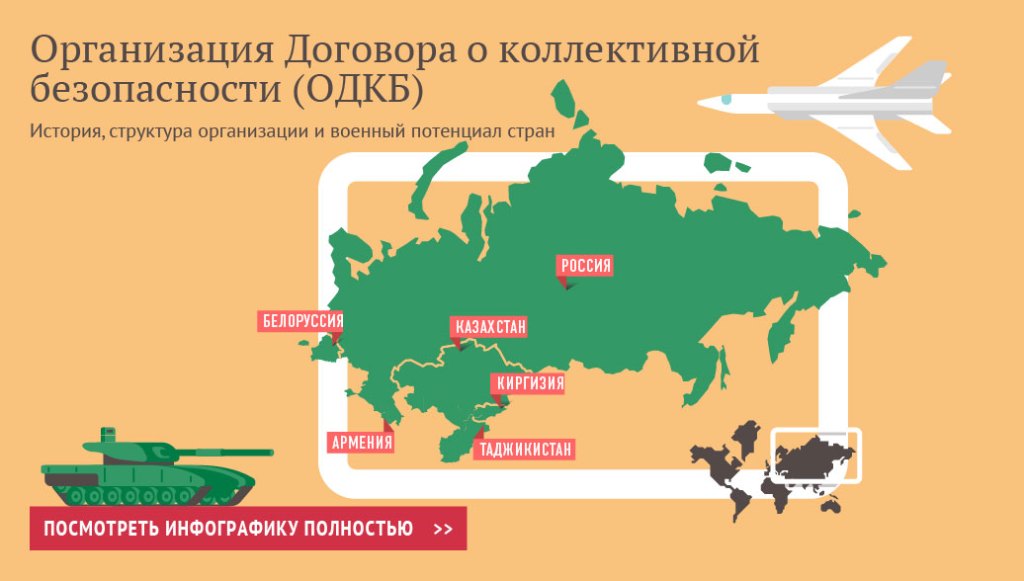
Collective Security Treaty Organization (CSTO): Armenia, Belarus, Kazakhstan, Kyrgyzstan, Russia, Tajikistan.
A full translation of the Novaya Gazeta article on which the post is based can be found here:
 The Dragon is Slain
Leave a comment