[Translator note: The brief history that follows is just that – brief. There is much that could be added by researching almost every paragraph. This article was written as a sketch to commemorate the “Apostles to the Slavs” (the term does not appear here), Cyril and Methodius, in the Russian Orthodox Church. In the translation, I have chosen to use the term ‘Slavonic’ rather than ‘Slavic’ to describe the writing system they developed, because the university course, which offers the study of the origins of the written Russian language and of other Slavic languages, is usually called Old Church Slavonic.]
On May 24, the Orthodox Church observes the Day of Remembrance of Cyril and Methodius, [designated as] “equal-to-the-apostles,” and developers of the Slavonic writing system.
The Day of celebrating the Slavonic writing system and culture is inseparably connected with Cyril and Methodius – it is observed in all Slavic countries on May 24.
Cyril and Methodius, after developing the Slavonic writing system, translated liturgical books from Greek into Slavonic, including epistles of the apostles and the Psalter, and chosen readings from the Gospels, that is, they facilitated the introduction and dissemination of the Slavonic liturgy.
Sputnik Georgia relates a short biography of Saints Cyril and Methodius – enlighteners of the Slavs and champions of the Christian faith – and the history of the development of the Slavonic writing system.
A Short History
Birth brothers – Cyril and Methodius (their secular names are Constantine and Mikhail) were born into a believing family of the nobility, in the Greek city of Thessalonica.
After receiving a very good education, Methodius, the oldest of seven brothers, at first, having chosen a military career, ruled in one of the Slavic principalities that were subordinate to the Byzantine Empire, where he also learned the Slavonic language.
After serving 10 years, Methodius in around 852 [A.D.] took monastic vows (i.e., having his hair cut in tonsure style) in one of the monasteries on Mt. Olympus (Asia Minor).
Cyril, the youngest of the brothers and distinguished by his exceptional philological abilities, was drawn to the sciences. In Constantinople, he studied with the greatest scholars of the day, including Photius, the future Patriarch of Constantinople.
After completing his training, he received his priesthood and was appointed as curator of the patriarchal library attached to the Hagia Sophia Church and taught in the higher Constantinople school of philosophy.
Cyril was wiser than his years – he defeated in debate the leader of the heretic-iconoclasts, Annius [translator’s note: cannot determine who this was].
Later, he left to be with his brother, Methodius, in the monastery, where he spent time in study and prayer. There, for the first time, he began to study the Slavonic language as he associated with Slavic monks at the monastery.
The Byzantine Emperor sent Cyril and Methodius to the Khazar Khanate[1] in 857 [A.D.] to preach the Gospel. Along the road, having stopped in the city of Korsun [translator’s note: the present-day city of Kherson], the brothers miraculously found the relics of the holy martyr, Clement, the pope of Rome.
Methodius and Cyril then set out for the Khazars and safely convinced the Khazar prince and those close to him to accept Christianity. They also freed 200 Greek prisoners.
The History of the Slavonic writing system
The Slavonic writing system appeared in the 9th century, for it was then that the alphabet took form.
The history of the Slavonic writing system is thus: Moravian prince, Rostislav, sent emissaries to the emperor with the request to translate Christian liturgical books into the Slavonic language and to send teachers to Moravia for preaching to the Slavs in their native language.
The emperor assigned this mission to Cyril and Methodius, sure that they would manage it best of all. Cyril put together the Slavonic alphabet with the help of his brother, Methodius, and disciples Clement, Gorazd, Naum, Savva, and Angelyar.
It is thought that the year of the birth of the Slavonic writing system is 863 [A.D.], when the first words were written in Slavonic. Some chroniclers confirm that these were the words of John the Evangelist: “In the beginning was the Word, and the Word was [with] God and the Word was God.”
After completing a translation of the Gospels, Psalter, and chosen services into Slavonic, Cyril and Methodius were sent to Moravia, where they began to teach the liturgy in Slavonic.
Two Slavonic alphabets were compiled – the Glagolitic and the Cyrillic – and both were used. Preserved Slavonic manuscripts have been written in both alphabets.
But over time, the Cyrillic, the letters of which are much simpler to write than the archaic Glagolitic, pushed the Glagolitic out of use.
The development of the Slavonic writing system had great significance for the cultural and scientific development of the Slavic people. On the basis of the Cyrillic, the Russian writing system arose as well as the writing system of other Slavic peoples.
Saint Cyril died in 869 [A.D.] at the age of 42. Just before his death, he received the ‘schema’ (the highest step of Orthodox monasticism, [which demands from the one being so accredited – according to church regulations – fulfilling severe ascetic rules.]
Methodius, soon after this, was ordained in Rome to the archbishopric and continued the work of his brother. He died in 885 [A.D.]. The burial service was conducted in three languages – Slavonic, Greek, and Latin – and he was buried in the Velehrad [in Czechia] Cathedral.
For their activity, Cyril and Methodius were counted as saints still in antiquity. The Russian Orthodox Church has honored the memory of the enlighteners of the Slavs since the 11th century. The most ancient services for the Saints and still practiced today, go back to the 13th century.
The solemn celebration of the memory of primates Cyril and Methodius was established in the Russian church in 1863.
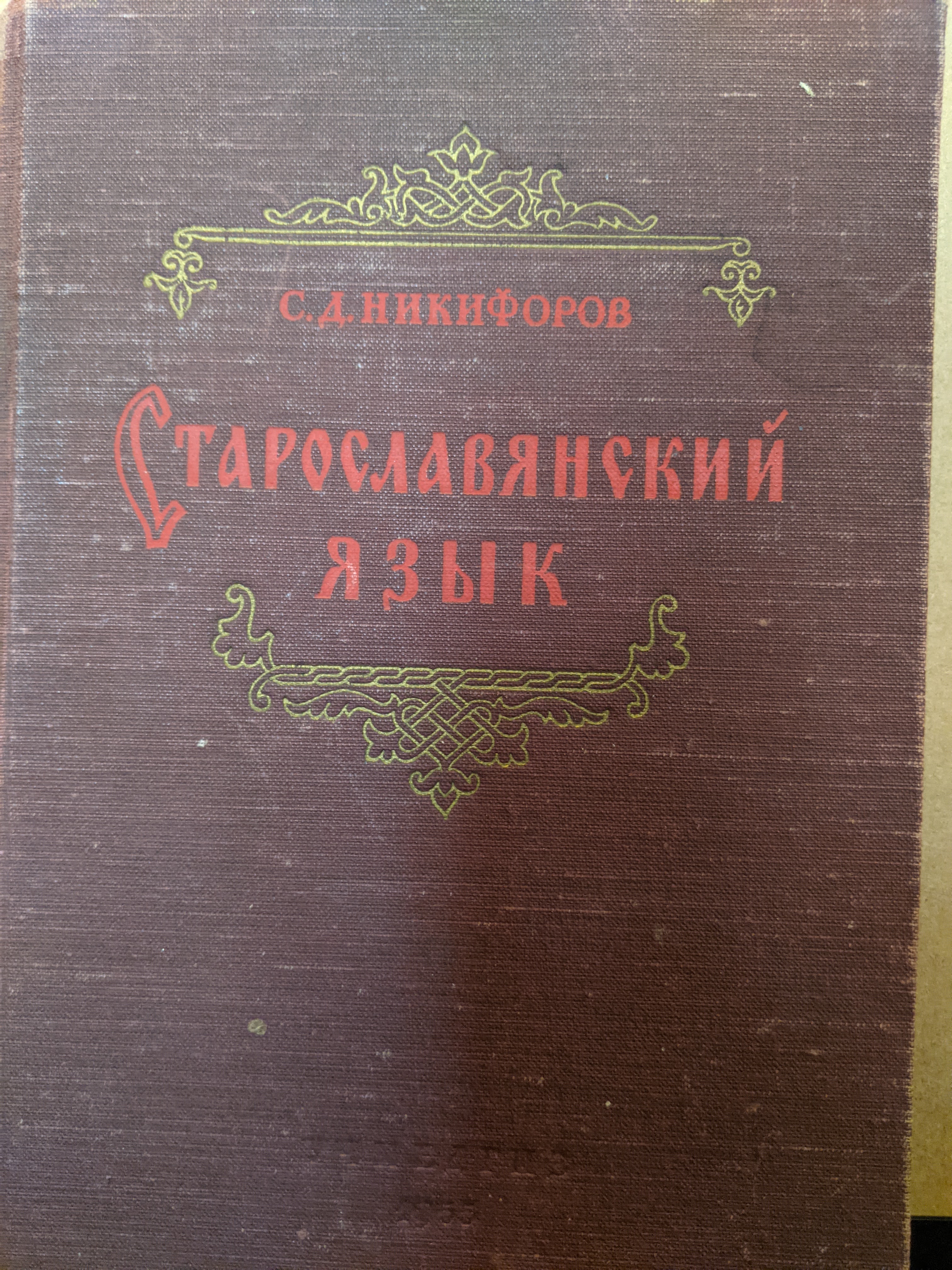
The material has been prepared on the basis of open sources.
[1] https://www.ancient-origins.net/history-famous-people/khazars-0011246
 The Dragon is Slain
Leave a comment