The following is an opinion piece published on the Moscow Komsomolets news site written by Aleksandr Tsipko, who, as a member of the Russian Academy of Sciences since 1972, has enjoyed a long career as a social philosopher and political scientist. He was a proponent of Gorbachev’s perestroika strategy and is the director of the Center for Political Science Programs of the International Foundation of Socioeconomic and Political Science Research at the Gorbachev Foundation. He is also principal collaborative scholar at the Institute of International Economic and Political Research of the Russian Academy of Sciences. He has proposed the concept of “liberal patriotism,” calling for a return to the historical traditions and moral values that existed in Russia prior to the 1917 Bolshevik revolution that ushered in the era of the Soviet Union. [1]
The article follows [translated from Russian by Lahbrais O’Coileain]
“Violence over Reason”
Recently anti-Western philosophy has once again become popular. But it is necessary to remember that behind it [anti-Westernism] always stood the desire to find justification for our lagging behind and some sort of sadistic contemplation of the sufferings of Russian man, being considered [i.e., the sufferings] as a manifestation of some special Russian mission.
It has always seemed to me that nowhere has anti-Western fanaticism been so openly displayed as in the philosophy of Konstantin Leontiev. We Russians do not need European humanism, which desires to bring man happiness in life, he taught, because “the main enemy of man is humanity,” because only suffering opens the road to God to man. And, Leontiev insisted, because there is nothing closer to the soul of Russian man than “long-suffering and humility, eager submission to authorities, sometimes unjust and cruel, like any earthly powers.”

In the first third of the 20th century, during the Russian emigration, Eurasianism developed and strengthened – a teaching that considers Russia as a special civilization, neither eastern nor western, standing between them. One of the “founding fathers” of the concept is considered the philosopher Nikolai Trubetskoy.
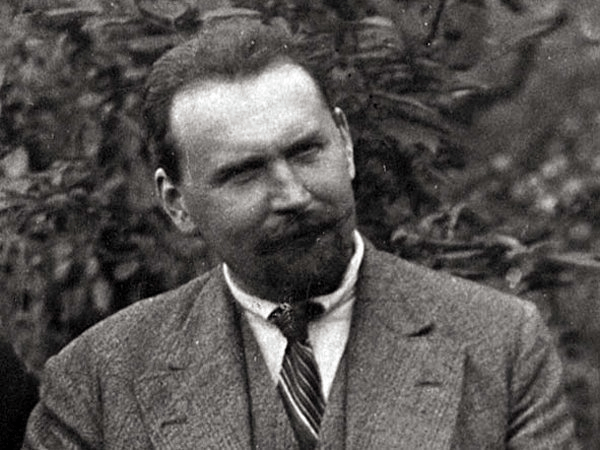
Honestly speaking, in his writings I see much more sadism and justification of violence than in those of Leontiev. Leontiev all the same somehow carefully says that taking into account “the classlessness strange to our Russian soul and the equality of civil rights, we Russians, to the extent possible, need to beware of resembling the West.” And today they are attempting to force Russia to live by the ideas of Nikolai Trubetskoy, who proposed that the legacy of Genghis Khan is much closer to the Russian soul than the Romano-Germanic culture of the West. Konstantin Leontiev was an enemy of the European idea of equality of all before the law. But he, in differing from Nikolai Trubetskoy, did not idealize the East. But the Eurasians, following Trubetskoy, are saying to us today that we Russians will acquire a real priority and real independence when we look at Russia, not from the West, but from the East, when “we reject the absolute authority of European culture, the ideals of European progress.”
From the point of view of the fathers of Eurasianism all “Romano-Germanic forms of life,” i.e., republicanism, separation of powers, equality of all before the law, and change of power, for us Russians, are not needed, and only when we do away with them will we stand upon the path of truly independent development. Present-day Eurasians following Nikolai Trubetskoy consider that we will become truly Russians when we bring back “the people’s submission to God’s will, the idealization of czarist authority, piety, and most important – ritual confession.”
Konstantin Leontiev, as an enemy of bowing to the individualistic West, to a certain extent, remained a Westerner. The culture of western heroism, asceticism, and aristocracy was close to him, and he especially admired the heroics of Middle Ages chivalry. Leontiev saw the beauty of Europe in the beauty of the epoch of the Renaissance. But the Eurasians are calling us to search for examples of true humanity in the morality of Genghis Khan who thought that traitors “should not only be despised but also mercilessly destroyed.”
Eurasian Lev Gumilyov, in his book From Rus to Russia, turned attention to and to some degree justified the fact that Genghis Khan killed not only the traitor but also his parents and even his children because he thought that the traitor gene is transmitted hereditarily. And, reading Gumilyov, I felt that voluntarily or involuntarily, anti-Westernism as a worldview leads to a depreciation of human life, reconciliation with violence, and reconciliation with the traditional cruelty of the East. Eurasians somehow lose the possibility of an objective relationship to that which they call Turanian customs and Turanian culture, and with them it turns out that the Tatars of the times of the empire of Genghis Khan had even greater morality and humanity than the rulers of Europe of that time. Note that there was not, as a matter of fact, a fiercer warrior than Timur [aka Timur-i-lenk/ Tamerlane]. And nonetheless, Lev Gumilyov wrote: “Of course, one can judge the rules and actions of Timur. But he could hardly act otherwise, without building a pyramid out of the heads of those killed.”

I agree with the fact that the leader of our Eurasianism, Aleksandr Dugin, isn’t playing, as they think in the West, some sort of serious role in the formation of an ideology of modern Russia. But one should see that anti-Westernism and the perception of European humanism with its values of freedom and values of human life as the enemy of Russianness, voluntarily or involuntarily, leads to the dehumanizing of Russia and to the necrosis of the Russian soul, and voluntarily or involuntarily, deprives us of the foundations of humanness.

Not at all accidentally exactly in the epoch of being infatuated with Eurasianism, in the epoch of Russian man bowing to the East, spreading at home is the justification of Stalin’s crimes, justification of the Great Terror, and not at all accidentally we have Gorbachev with his humanism, with his deep rejection of everything that stood for Stalinism, becoming the enemy of the Russian people.
Finally, one should understand that hope for the future of the nation, its instinct for self-preservation, and the culture of its soul persist as long as our Russian culture, which preached Russian humanity and the value of human life, persists. One should understand that the spiritual health of the nation depends on respect for universal morality, which, by the way, Gorbachev tried to rehabilitate with his restructuring (perestroika).
We will lose everything if we look at Russia from the East. The characteristic of the Chinese is a kind of calm, indifferent perspective of their own death. But even the Chinese do not have what Eurasianism preaches, namely contemplation of politics and political life through the eyes of Timur and Genghis Khan.


Only the person who has lost conscience and reason can insist that the salvation of Russia is in rejecting the “absolute authority of European culture,” rejecting the “ideals of European progress,” rejecting the “values of the Enlightenment and humanism,” rejecting the “European belief in progress,” rejecting the “value of freedom, the value of the human personality, and of human life.”
And what do Eurasians propose instead of the value of human personality and self-worth? Denial of everything that lies at the foundation of the humanism of everything European, including also Russian culture, namely the “awareness of oneself as part of a known hierarchical system,” awareness of oneself as part of a national “idiocracy.” Rather than a thirst for self-realization of personality and personal success, from this point of view, true Russianness is “submission to God’s will.”
And note: If the enlightened patriotism and liberal conservatism of the Vekhovtsy [2] of Ivan Ilyin became our state ideology in the ‘00s; if then the rebirth of statehood was connected with the [return], as Putin said, to the path of European civilization, then now we can give away our soul to the ailing anti-Westernism of our present-day Eurasians.

But the most tragic is that presently our Eurasians have forgotten or do not know that Nikolai [Sergeyevich] Trubetskoy, who thought all this up at the beginning of the ’20s, already after several years himself termed all this journalism of Eurasianism violence over reason. In his multitudinous letters, he admitted that for him Eurasianism was a mind game, that somehow, he was unable to show in another way that, on the one hand, he is not with the Whites, not with the Reds, not with Slavophiles, but at the same time he was faithful to Russia. Trubetskoy wrote to his friend, Suvchinskiy, on 10 March 1928: “As a matter of fact, all this ‘Eurasian nightmare,’ this is a heavy cross for me, and I want to quit it, walk away from it, forget about it, and this would be a great happiness for me.”
Really, there was something initially false, absurd in the ideology of Eurasianism, generated by the fantasies of Trubetskoy. On the one hand, he called for reconciliation with the cruelty of Genghis Khan, called for reconciliation with the sacrifices Russian man paid for his ritual religiosity. But, on the other hand, Trubetskoy, as a personality, was the personification of the exact opposite of the ideals of Eurasianism. In everything, and above all as a scientist, he was a follower of Europeanness. And, not at all accidentally, he realized that the existence simultaneously of two obviously contradictory roles is something unnatural, crippling the soul.
A long time ago, in June 1967, serving an internship required for graduation at Prague University, I was living, on the invitation of student and friend of Nikolai Trubetskoy, the famous Slavist Leontii Kopetskii, in his apartment, and Leontii Vasilyevich was relating to me that his teacher and friend, Nikolai Trubetskoy, before the end of his life, regretted that he had devoted so much energy to this crazy game of so-called “Eurasianism” journalism.
And must we really sacrifice our future in the name of the implementation of these ideas? Really, wasn’t the 20th century enough for us Russians, which we gave away to the insanity of Marxist Communism?
[1] Most of the introductory information on the author of this article was taken from https://peoplelife.ru/316987 .
[2] Vekhovstvo – A philosophical and socio-political movement in the Russian intellectual milieu at the beginning of the 20th century that received its name from the intellectual journal Vekhi (1909). Its brainchild was Mikhail Gershenzon (also Gershenson).
Among its authors were four former Marxists: N. Berdyaev, S. Bulgakov, P. Struve, and S. Frank, who adopted Christian positions after rejecting Marxism as a purely economic doctrine which didn’t answer the fundamental questions of human existence.
The first issue was a collection of articles entitled Problems of Idealism (1902) and the final, Out of the Depths (1918).
The Vekhovtsy called on the intelligentsia, which they accused for the tumultuous years of the first revolution, 1905-1907, to refuse the worldview built on collectivism, populism, nihilism, irreligiosity, and the preaching of political radicalism. The positive program of Vekhovstvo relied on recognizing a person’s independence and personal responsibility for what happens – on the basis of universal Christian values.
Vekhovstvo received sharp criticism from Bolshevik leader Vladimir Lenin, who branded the journal as an “encyclopedia of liberal apostacy” in December 1909: “Vekhi is a continuous stream of reactionary hogwash, poured out on democracy. It is understandable that the journalists of New Time, Rozanov, Men’shikov and A. Stolypin, have rushed to kiss Vekhi. It is understandable that Antoniy Volynskiy was ecstatic at this creation of the leaders of liberalism.” (found at https://dic.academic.ru/dic.nsf/ruwiki/839577 ; translated from Russian by Lahbrais O’Coileain).
 The Dragon is Slain
Leave a comment